Tuesday, 13 December 2011

Singing in the pub: The Sheffield Carols

Last Friday night, I went to the other side of town and sang carols in a pub.
As my dear readers will know, I'm not at all keen on christianity. However, I do like a good sing, and I only learned last year that I live in a town that boasts a unique folk event, the Sheffield Carols.

These are not any old carols; they are traditional words, but sung to locally-written tunes, often unusual and complex, with four-part harmonies and so forth. The groups are very local, and pub-based. Each group writes its own tunes, and works them up to a carol season that starts  in November.  (http://www.localcarols.org.uk/sings.php )  

The Old Harrow hosts other folk traditions too, including Sword Dancing (http://www.oldharrow.co.uk/Sword-Dancing.php) . An idea of a carol session can be got at http://www.bbc.co.uk/learningzone/clips/sheffield-folk-carols-from-church-to-pub/6609.html and  http://www.youtube.com/watch?v=87PFoh9VJP8.

On Friday, the opening song was 'While Shepherds Watched', but sung to the tune of 'On Ilkley Moor Baht 'at'. Try it, it works! The song booklet, or 'Words', as it's called, boasts eleven versions of that carol, each with a different tune. The way the lines are repeated and sung has echoes of familiar, older forms, such as chorus lines in groups of 3, the first two lines the same, the third different, maybe splitting between male and female voices.

One of the inspiring things about this tradition is the way it mythologizes the local area. Tunes in the song sheets have local names, like Malin Bridge or Holmfirth Anthem, and more mysterious names like Spout Cottage or Egypt. If you'd been brought up singing that carol, you would never be able to pass Malin Bridge without thinking of the tune, the words, or maybe even some transcendent moment.

Such things charge the world with significance. Every bend of the river has a name, every town has a tune. It would be wonderful if we had a corpus of pagan/heathen songs of this quality to sing at the seasonal festivals. And communities, groups that cared enough to work them up into something worth showing off to the whole village/suburb. Choral singing is one of our species' most delightful skills, one of the bases of collective joy, and just the kind of thing we need to make life better in the straitened times to come.

Monday, 28 November 2011

USA travels


England to Texas:
It all started with a nightmare journey, the plane half an hour late out of Heathrow, leaving 1 hour and 20 minutes to get myconnecting flight at Chicago O'Hare. They kept us waiting in the first immigration queue for an hour, leaving just 20 minutes to get through the next 3 procedures. These were: get baggage from reclaim, get it security checked and then put it back on again. They didn't spare any farting about - the laptop had to come out of baggage, etc etc. Anyway, no time to recheck bag, had to run up to departure gate, where the excellent American Airlines staff sorted it for me. I was the last on board, 2 minutes before it left the ground. Deep joy, to be away from O'Hare's miserable incompetence and hostile security.

Staying at my friend's place in Smithville, a hamlet near Bastrop, central Texas, we had a heatwave. 80+F all week, and a plague of biting insects. One morning in the bathroom, I noticed a brown scorpion about 15 inches from my left foot. It looked dead, but I wasn't about to prod it and find out. My host later ascertained that it was indeed alive, and killed it. 
There were some great critters, though. Looking out on their back yard, I speculated that my hosts had placed an incredibly bright red plastic bird on the bird feeder. Then it flew off - the magnificent cardinal bird. And we saw a roadrunner, which looked almost as daft as its cartoon incarnation.

The land was suffering though. The ground was baked dustbowl-loose, the trees dead or dying, apparently the biggest drought in decades.

A few things really puzzle me about the US of A. Not the big things, like why anyone not in the top 10% of income ever votes Republican, when that is clearly not in their interest. Far be it from me to criticize that, we have the same problem in the UK. It's the small things that puzzle me. Like why are American plugs and sockets so flimsy? And the money: the nation which leads the world in being obsessed with the stuff, has a currency that looks like Monopoly money, but without the helpful colour-coding. 

The food can be puzzling too. Don't get me wrong - I love small diners, the preponderance of fresh seafood and many of the local delicacies (pecan-based in subtropical Texas). But the other day, I added a bunch of radishes to my snack purchase, and the supermarket checkout girl had no idea what they were. And the chocolate. It's been years since I was last disappointed by a Hershey bar, so I bought a pack of Hershey choc drops and managed to get half way down them before the taste of rancid milk burned through, and I had to ditch the rest. Why don't they fix that problem?

Therein lies one of the big secrets of capitalism's failure - the tyranny of brands. My lawyer friend, short of clients because he works alone, analyzed this for me in the context of the service you get from a law firm. One - it is driven by advertising; Two: only big firms can afford to advertise, Three: so they hire lots of poorly paid, poorly trained paralegals, and use a production line model. Result? the service they offer is the worst you can get. Stripped down, this formula is: big marketing = reduced quality. Even chocolate suffers.

And capitalism is supposed to give us choice and competition, leading to increased quality? What went wrong? Marketing, the favouring of growth over sustainable sizing, destroying the true free market. Solution? Break up all companies above a certain size? Restrict adverising? Maybe. It could hardly get any worse than it is. 

Texas to Atlanta:
Lest my curmudgeonly complaints seem biased and miserable, I shall assert that much about this trip has been wonderful.This includes, of course, friends, but also covers the basic decency of most Americans. And I had plenty of time to rewrite my novel, stalled for lack of publishing prospects, and revived by SiriusInk's avid interest.

Also the weather was gorgeous, once we'd escaped the heatwave. Flying, only the thinnest of haze over the patchwork quilt of fields, the shining river, the dam lake, the winding roads.
Now over a body of water with numerous inlets, the sand orange-pink in slanting afternoon light.

Now thick, evergreen and deciduous forest, watercourses snaking through it, no human structures as far as the eye can see. Then tiny settlements appear in clearings, then forest-ringed suburbs, Atlanta's townships. Then we cruise down through industrial units, still as surrounded by woods, down to the airport, downtown still invisible from this side of the plane.

Atlanta was two wonderful days, the afternoon of workshops that Ian Read (hypnosis) and I (breathwork) did, came off splendidly, great audience and a great end to the trip. All I need now is some luck to get me through the security hell of O'Hare on the way home.

Atlanta to England:
Yes, Chicago O'Hare managed to screw up again. There are no maps or information about what's going on in other terminals, so it's pot luck whether you get to your departure gate on time. Fortunately, we had time to spare, so the fact that they didn't bother reporting our flight on the boards of the terminal we were in had no effect, other than deepening our contempt for this place. 

Nil points, O'Hare.You are where one would stick the tube to give the world transport system an enema. Mark my words, dear friends: if you can possibly help it, never, ever get a connecting flight at Chicago O'Hare. They might make you stay there.


Friday, 25 November 2011

Raise a glass to the memory of Philip Harper

On Tuesday I learned of the death of my friend Philip Harper. He was a truly extraordinary man, who lived his life in the quest for higher consciousness. Having been born with cysteinosis, he knew his life would not be long, and he packed more into his twenty-something years than most people manage in twice that or more.

Right up to the end, he was still struggling: a few months ago, he ordered a very demanding esoteric study package.

His final blog entry:
'I have now been told that their are no medical treatments options left to cure my cancer. At this point you reflect on the fact that although they or us may think doctors are gods, they are not. Whats left, all the non-medical options and a will to live.'
For those who never had the privelege of knowing him, his blog is still up at http://ritualchaosmagic.blogspot.com/  . His website is also still visible at http://www.ritualchaosmagic.co.uk/  

There is a lot more that I could say about Phil, but I want to get this out into the world. 
So I raise a glass to a man who will be sorely missed, but who leaves us all a mighty example.

'Now the words of the High One
Are heard in the High One's hall.
... Hail, to those who hear them!'

Sunday, 30 October 2011

The Crowned and Conquering Brat: Some reflections on nippled cups, Grab Bags and baby talk

It's time I had a proper rant.
Some of the things I dreamed about in the Playpower phase of my youth have come true, and I hate them.


Crowley's magick takes us through a succession of Aeons: first, there is Isis the Mother, the Pagan Aeon, in which we are ruled by the laws of Nature. Then comes Osiris the Father, the Aeon of monotheism and, most recently (since 1904 according to Crowley), the Aeon of Horus, the Crowned and Conquering Child, the beginning of the maturation of humanity beyond repressive laws.

Yes, much of the old world had to go, such as the sexual repression horror of Victorian society that still lingered on.

That was dealt a significant blow by the lifestyle rebellions of the 60s; the Aeon of Horus was still making sense.

Fourteen years ago, it still made sense: In Chaotopia! I prized neoteny, which, biologically speaking is when individuals reach sexual maturity without developing all the other adult characteristics of that species; this is of course a metaphor for continual openness to development.

That freedom to be anything is the crown and burden of humans – that we are creatures of chaos, that we don't really know what we are. That means we can become anything – our limitless freedom of thought produces Auschwitz, and Beethoven, James Joyce and Big Brother.

This open-endedness is such a deep part of our nature, so I stand by my defence of neoteny – minds that are flexible and adaptable are those which retain youthful characteristics.
 
But the dark side of the Aeon comes increasingly to the fore: every Aeon must go through this, the accumulation of dilution, compromise, corruption.


Am I the only person who is deeply sick of the following?

1. Adults using baby talk: The other week, I read a report of a magistrate doing the requisite telling-off thing to a woman described as 'heavily pregnant' for an alcohol related offence.

The admonishment actually went: 'You've got a baby in your tummy...'
Did she think the woman she was addressing was severely intellectually retarded? Aren't magistrates supposed to be mature and sensible members of the community? Apparently 'no' is the answer to both questions.

Even professionals like doctors and vets use the word 'poo', a perfectly suitable term for 8-year olds, before they get the hang of what social contexts demand 'excrement' or 'faeces' and which 'crap' or shit'. Suggestion: some Home Office guidelines on addressing adults of reasonable mental capacity; Doctor, I don't do 'poo'.

2. The description 'Grab Bag' for a slightly-too-large bag of crisps. Toddlers grab, adults 'pick up' or maybe 'seize'. Suggestion: replace term 'Grab bag' with 'Greed Bag'.

3. Those nipple-like caps that project out of the plastic tops of disposable coffee cups, which some people actually drink thro, like nipples, eschewing the aroma of the heavily-branded coffee they have just forked out for.

Maybe that ridiculous nipple resulted from the landmark US court case many years ago, in which a person actually successfully sued McDonalds for serving her the hot coffee with which she managed to scald her thighs. Such a plunge into Aeonic-scale legal idiocy cries out for commemoration, in our species' collective Darwin Awards, represented in the form of nippled coffee cups. Thus passes the glory of humankind.

So what is it all about, this infantilization? Why can't I jump on and off buses as they hang around in traffic? Is it because we can no longer stand to lose a few idiots a year in exchange for these delightful, trivial freedoms? Are we thereby a more compassionate society?

I don't think so; consider the following: A few months ago, the Powers That Be closed a gap in the central fence of the dual carriageway at the beginning of the Old Kent Road, so now people have to step over it. This stops the less mobile from nipping over, and makes it slightly more dangerous for those that do. Why? So some bureaucrat can sleep at night, knowing he's taken the advice of his lawyer.

That driver is insurance; this is what makes sense of the extreme anti-smoking notices, which in some places even appear out of doors these days, in defiance of any basic human sense, the effectively-infinite dilution of the open air. But the logic of it is that some person might sue, and sue successfully, someone who allows smoke to drift over their business premises. Bearing in mind the McDonalds decision, one has cause to fear what such stupidity is capable of.

The degraded philosophy underlying that decision gave us our current claim-and-blame culture, surely the epitome of infantilization, the attitude that the adult citizen is not responsible, that Baby needs protecting from Hirself every second of every day.

So what is the function of this sick cultural mutation, the cui bono? It's consumerism. We are being softened up for the endless destruction of meaning and quality and the attempt to replace it by buying unnecessary stuff which, until we learn better, we work long hours to acquire so we can display it to our neighbours. Status crap, in other words.

Dreary, isn't it? Humans could be so much better.

Monday, 10 October 2011

More books for the market stall

Hello everyone, I need to slim down my book collection, so am selling the following.
With some guideline prices, but any reasonable offer accepted, postage extra.

BOOKS
Stanton T Friedman - Top Secret / Majic. Hardback, first edition. £8
Ann Druffel - How to Defend Yourself Against Alien Abduction, hardback £3
Ken Wilber - The Eye of Spirit, p/bk £5
David Madsen - Confessions of a Flesh-eater (complete with recipes) p/bk £2
Alex Constantine - Psychic Dictatorship in the USA p/bk £8
Robert Graham - Night Vision; The powers of darkness £10
Timothy Leary - Chaos and Cyber-Culture £7

And some CDs:

Freya Aswynn - Shades of Yggdrasil. Includes the notorious recording of Crowley's Leah Sublime £8

All other CDs £5
Stuart Davies - 16 Nudes, Live
Changes - Legends
Blacklight Braille - The Castle of the Northern Crown (2 copies)
" - Black Moon Selection
" - Songs From Moonlight Snow; the songs of Owen Knight
" - Dietles Tavern to Shadowland (2 copies)
" - Sailing Away
" - In a Dark Garden


Friday, 23 September 2011

Review of 'Reality' by Peter Kingsley

Reality, by Peter Kingsley
www.peterkingsley.org/Reality.html

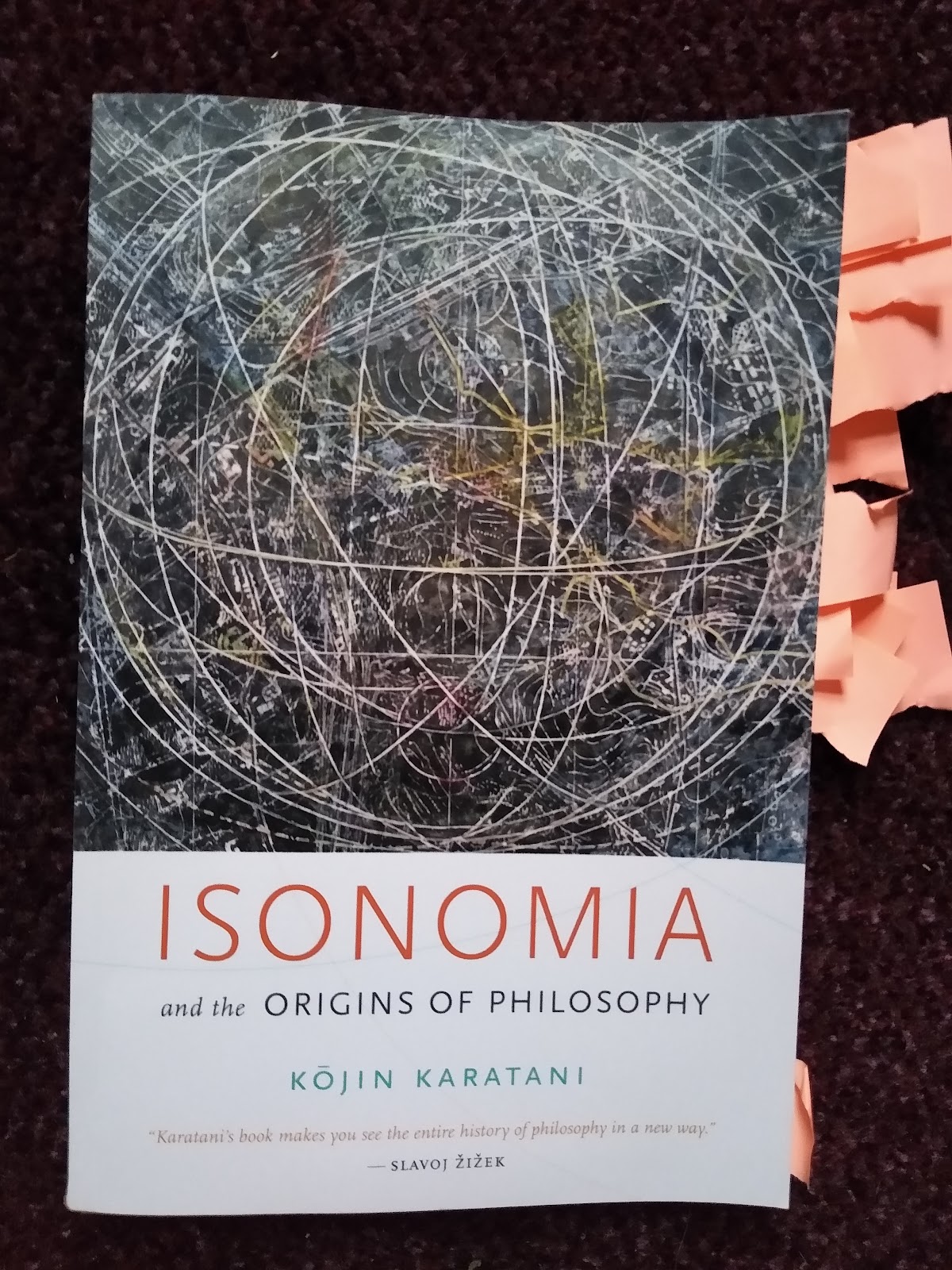
A book the size of a housebrick-and-a-half, called 'Reality: now there's an author who's not lacking in confidence. In a nutshell? A 550 page commentary on two pre-Socratic 'philosophers', Parmenides and Empedocles, rooted in a passionate critique of the origins of so much of our culture and its limitations; origins that Kingsley claim lay in a hatchet-job done by Plato on the pre-Socratic mystical traditions.

This book was a roller coaster ride for me. Right from the start, it got on my tits, with its attitude of 'your life is a pile of shit because you are not enlightened', the same superior cosmic style that I reacted to so negatively when I first encountered mysticism in my teens.
...Even though I find the idea of a radical deconstruction – no, scratch that, a radical rejection – of normal reality absolutely irresistible.

In the language of this book, I still linger at the three-ways, with the ghosts who are not living fully. For so Kingsley would have us believe the pre-Socratic Italian-Greek teacher Parmenides was saying, in brief works which academics apparently usually take as the origins of logical thinking: Parmenides is no respecter of elites - that's where all of us stand, in relation to reality as it really is. Focusing on the origin of logic as the origin of our modern way of thinking is a totally deluded notion; Parmenides' words referred to an era 'before people learned how to use reasoning as a mask to disguise their terror of logic'.

He defends the 'terror of logic' with reference to Socrates who, he claims, was killed for making the Athenians feel like fools. He depicts Socrates as one of the last of a line of enquiry that used logic to demonstrate that ordinary thinking cannot produce a consistent model of the world, that everything we think hangs above an abyss of incoherence, 'aporia', the pathlessness in which Socrates left his dialogical victims.

Kingsley's reinterpretation of the pre-Socratic lineage is based on discoveries about the practice of incubation, a meditation conducted in underground chambers. Parmenides, it seems, was the leader of one such mystery school, in which the initiates gained visions, maybe meeting the underworld Goddess, Parmenides' interlocutor in the poem Kingsley takes as his core work.

In this poem, the Goddess cuts away all self-importance and smugness, dismantling the familiar world, stripping away all assumptions; 'and from this perfect reality that she (the Goddess) describes, there is no escape'.
This was when I realised the book was really speaking to me. Perhaps the subtlest and most lingering of my visions was exactly that - there is no escape, anywhere - what we see is, in a very important sense, what we get. My intuition calls it embeddedness.

I like the way Kingsley uses the term 'being'. Often people annoy me with that word - what right have we got to ascribe existence to one thing and not another? Well, Kingsley, in line with Parmenides' goddess, ascribes 'being' to it all; indivisible, bornless and endless. That I can get with.

Kingsley leads us through a version of the mystical solve et coagula. In this process, the face of the Goddess changes; at first, we met the unnamed Persephone, whose 'deceptive words' take our world apart, then later, as her deception becomes more total, more paradoxical, more complete, we encounter the seductive Aphrodite, whose charm hunts down and makes helpless the strongest man. But having gone through the death process, we have attained a kind of perspective that enables us to live in Aphrodite's lush garden of illusion without losing our minds again.

So what has this mystical cult really got to do with the history of Greek philosophy? Kingsley tells it as a gigantic selling-short: 'there was no way [people] were going to accept that the ultimate reality is whatever they see around them ... And so ... philosophers have worked their hardest for more than two thousand years to make his 'it' some kind of logical abstraction that exists somewhere else - on another level of reality.'

So he begins to insert the idea that reality is a seamless, unitary world, with no levels, only the delicious illusions of Aphrodite and the frightening truths of Persephone, both referring to the same universe.

The next sections, on Empedocles, take us into other territory, but there is still much mystical lore to be recovered. Empedocles' thought has had some strange descendents – his fanciful Aeonic model was taken far too seriously by the Gnostics, providing the basis for their profound hatred of the world and the flesh.

That is what tends to happen when initiatic writings fall into the hands of the priestly ascetics, the life-hating control freaks, and such perversions cannot necessarily be levelled against the original texts. But is it surprising that Empedocles' writings spawned toxic nonsense, when he spouted world-hating dualism like: 'Incarnation as human beings is, very specifically, a punishment for the daimon's failings'?

However, Kingsley uses Empedocles to bring in a vital new theme, which I'll return to: that Love and apparent unity is the basis for unconsciousness and automatic behaviour, but that Strife, the principle of separation, is on the side of truth.

The theme of the self-exhausting nature of logic is resumed with Zeno's paradoxes. We are taught them as shallow games, but Kingsley claims Zeno 'used logic in its truest sense, not to fortify or justify our commonsense view of reality, but to undermine it, destroy it.' He brings together Parmenides, Empedocles and Gorgias, the founder of the Sophists, whom Plato decried as shallow and irresponsible in that they merely held up mirrors to popular misconceptions.

Now Kingsley has got us ready to reveal the Platonic hatchet job on the mystery schools, the beginning of a cultural shift away from mysticism, perpetrated on the European world these last 2500 years. Athens invaded Lipora, one of the centres of the mystery tradition that included Parmenides, Empedocles and incubation; this was the political dimension. Plato's writings took care of the written evidence of the tradition, such as the poem of Parmenides Kingsley refers to throughout the book, by radically reinterpreting them, in ways which Kingsley demonstrates do not stand up well under close examination.

Plato elaborated Empedocles' simple cosmology, of everyday life and the Absolute bound inseparably together, into different levels, articulating the notion of transcendence, 'the need to get from here to there even though there is no there apart from here'.

The distortion of pre-Socratic texts continued, and continues still; Kingsley shows us how Empedocles' words were actually altered, in what he sees as a deliberate suppression of mystery traditions.

That criticism strikes a strong chord with me. Consider Plato's notion of a realm of divine forms, that aetherial library of cosmic designs. Where are they supposed to be? In the mind? Fair enough, and we all share them; they resemble Jung's archetypes of the collective unconscious, the ur-patterns of how we construct and perceive the world.

We can go further than that, and identify the structural relationships that are demonstrated by mathematics as ideal Forms too, patterns that are so deeply embedded in our minds that we see them everywhere we look.

However, I find very dubious the idea of actual other levels or planes of reality which contain these forms, levels which ascend step after step towards God. This is what the Neo-Platonists did with Plato's notion, and it is the basis of the Four Worlds of Renaissance Qabalah. And the philosophical underpinning of the empire of 'reason', its chief weapon in defeating the mystery traditions, and keeping them defeated.

This set of notions is what we have to thank for the rigmarole of Western occultism and, taken seriously, this book would be the death-knell of all that crock of neo-Platonist nonsense, that concoction of planes, rays and worlds. I for one would not miss it.

The way of awakening that Kingsley hints at throughout this book has some definite qualities in common with the Odian way, not least the sacrificial basis of full consciousness: 'the very act of becoming conscious is, itself, a process of destruction; of separation; of learning to die before we die.' [P435].

Concerning the illuminatory necessity of interrupting the Love principle with Strife, the author quotes a commentator describing the perfect sphere of love in Empedocles' cosmology – 'a state of crude and chaotic matter'; this sounds like Ymir, before Odin Vili and Ve carve a coherent universe out of him, before Strife gets on the case and produces some clarity.

It's not that there's anything wrong with love, but until we separate ourselves from our automatic impulses, which are ruled by love, by Aphrodite, we cannot become conscious. After we have achieved consciousness, then is time to return on the other arc of the cycle, into engagement with the world, into the rage of desire that Love generates.

Another feature of interest in this system [P289] is when Kingsley tells us that 'the ability to trap and bind successfully had a single name – metis'. Compare Odin's valknut, in its open and closed forms – it is the primary symbol of binding and loosing. One dimension of this dualism is in the technology of magical spells, in which we cause flow or stoppage. Another is in relation to the core nature of selfhood: on the Tree, Odin is torn apart, his self sacrificed, and out of that chaos new knowledge – the runes – and a new Self emerge. These are the two modes in which selfhood operates, the poles of solve et coagula, the cycle of dissolution and reintegration. On the one arc, we allow our selves to undo themselves; incubation, like some forms of sitting meditation, is a tool of the dissolution stage. The reintegration stage is automatic, but the nature of the visions and of the new self that emerges is influenced by our aspiration and knowledge.

Metis is usually translated as 'cunning', and this important divine attribute is examined in both Greek and Odian contexts in a fascinating paper 'Cunning intelligence in Norse myth; Loki, Odin and the limits of sovereignty', by Kevin J Wanner, which would require another essay to even begin to do justice to. (Wanner is at http://www.wmich.edu/religion/kevin_wanner.html )

Kingsley's words show up vividly the sometimes-problematic nature of the RHP/LHP distinction. On p185, he writes of this 'perfect, complete' reality: 'The only choice we have, our single real freedom, is to decide whether to participate in it consciously or be at its mercy.... '
This does at first reading seem like classic RHP as defined by Dr Flowers, along the lines of 'get with the cosmic programme, don't stand out' - but the next section shows us another dimension:
'The one option we have is to turn around and face, head-on, all the impulses that keep bombarding us and pushing us in every direction. By turning each impulse back on itself we are returning thought and perception consciously to their source.'
That sounds like a recipe for meditation, not for self-annihilation; more like someone fearlessly deconstructing all they appear to be, because they know there is something far deeper behind that anxious self.

Have we reached the source of the misunderstanding that seems to be at the root of much LHP/RHP dichotomy? Is it about where we draw the line, on this side of which is our free will, and on the other side of which the changes we label 'inevitable'?

There is another, and perhaps deeper, problem for the Odian seeker in this discourse. Kingsley criticizes seeking: '… if we manage to carry one particular search right through to the end, … we find ourselves straightaway at the beginning of another'.
To me, that's the core of the way. For Kingsley, it's bad: real Reality doesn't go anywhere, doesn't move. It's the opposite of the constant renewal of 'Seek the Mystery', this Absolute Reality.

On the surface of it, that's worrying; there is no progression, only perfection, always and forever. But the process Kingsley recommends is nothing but an increase in consciousness, and if that isn't what the Odian way is about, I don't know what is. And maybe the above idea is again a misunderstanding: the sense of a perfect universe comes at the culmination of a process, which will certainly feel like a journey. On arriving, one may feel that: 'There is no transcendental reality to get away to' (p288).
Now that is a notion I can get with – eliminate all those other levels, all those half-hearted semi-paradises, and let the self dismantle itself into bare, immediate presence. How can there be anywhere to go to from that place?

But we return, and then movement resumes. It may not ever feel as real again, that movement, but it doesn't mean we are not passionately engaged in changing the world to the best of our ability; even Kingsley admits his illuminated Greeks were engaged in political intrigue: the perspective of a motionless, eternal world has not paralyzed their will. They return from eternity and take up their work in the world again.

In the end, I can't find any serious fault with this book. Reservations, yes; his style has been described (by Duncan Barford) as 'arch', which fits perfectly; it definitely feels like he is talking down to his reader. This puts me off his other works, one of which I've been emphatically recommended by the friend who passed this volume on to me. I don't think I'll ever like his style, and it may irritate you too. But I have to recommend this book, because he has such vitally important things to say.

I'll leave you with a rallying cry from P497:
'Trying to escape from our own civilization can offer no real solution. What now is needed more than anything else is to penetrate to the roots of this western world and release the wisdom that has been waiting there for so long.'

Thursday, 15 September 2011

Chap-ism: an appreciation.

Seldom have I ever been accused of sartorial elegance, and most of those few occasions have fallen in the last year, since I decided I was just too old to go on getting away with being... casual? louche?... no, just plain scruffy.

Not that I was ever really scruffy - at least I always shaved. The current fashion, for neither having a beard nor not, gives us the unedifying spectacle of 50-something Oxbridge academics desperate to deny their age and just ending up looking like they could use a bath; but I have had a chequered relationship with the fashions that ran alongside my life.

As a 60s teen I was a proto-punk anarchist, a bright soft tie worn as a headband in ironical reference to hippie style. I wore my hair down to my shoulders and felt I was part of a youth vanguard. A year later I cut it short, when I woke up to the fact that longhairs were not guaranteed to espouse radical, countercultural ideas, and so the longhair gesture was meaningless.

In the 70s I sported a leather flying jacket and, yes, for one season, a moustache. My 80s garb was an extension of the same basic style. In the 90s I started dressing up more - suits and military fetish for special occasions - but my everyday wear was, frankly, dull, with the curious dullness of stylistic indecision.

What happens when we have no idea what our appearance might mean? I sit in a bar and people look lost, at sea in images, young men, 20 something, fuzz of stubble, corporate clothes that refuse to exert a sexual male identity... they are blurred, out of focus, these metrosexuals in the pseudo-community of their Gap clothes.

Not to mention the fashion victim teens who wear their corporate hoods up in blazing heat, even when there are no security cameras to hide ostentatiously from... let's not even step into that style abyss.

Can we escape from the gravity well of corporate clothing boredom? What might it be like to dress in a non-corporate fashion?

We have to look to subcultures for answers to that sort of question; enter The Chap, http://www.thechap.net/

A Chap (and the description is not male-restricted) adopts a 1940s style, only barely modified at all for contemporary sensibilities, and - important distinction, this – not just for special occasions, but every day.

This makes sense on a number of levels. For instance, consider layers, and the British climate. That old style is well adapted to the world of energy shortages which we shall all need to get used to. We walk out, we have great hats and overcoats. We step into a heated room, we remove scarf, gloves, hat, overcoat. The room gets warmer, we remove the jacket. We still have a waistcoat or a sleeveless pullover on over the shirt.

This is not only intelligent but massively more stylish than anything current hoodie-sports shoes-jeans fashion can possibly offer.

And consider self-reliance: traditional clothes can be repaired, if not too badly damaged. We keep shoes clean and stretched with shoe tree, preserving both fabric and appearance. We throw less away. We look better than the most expensively-attired name-brand victim, and we got most of it from charity shops.

Bugger... That was the secret.